
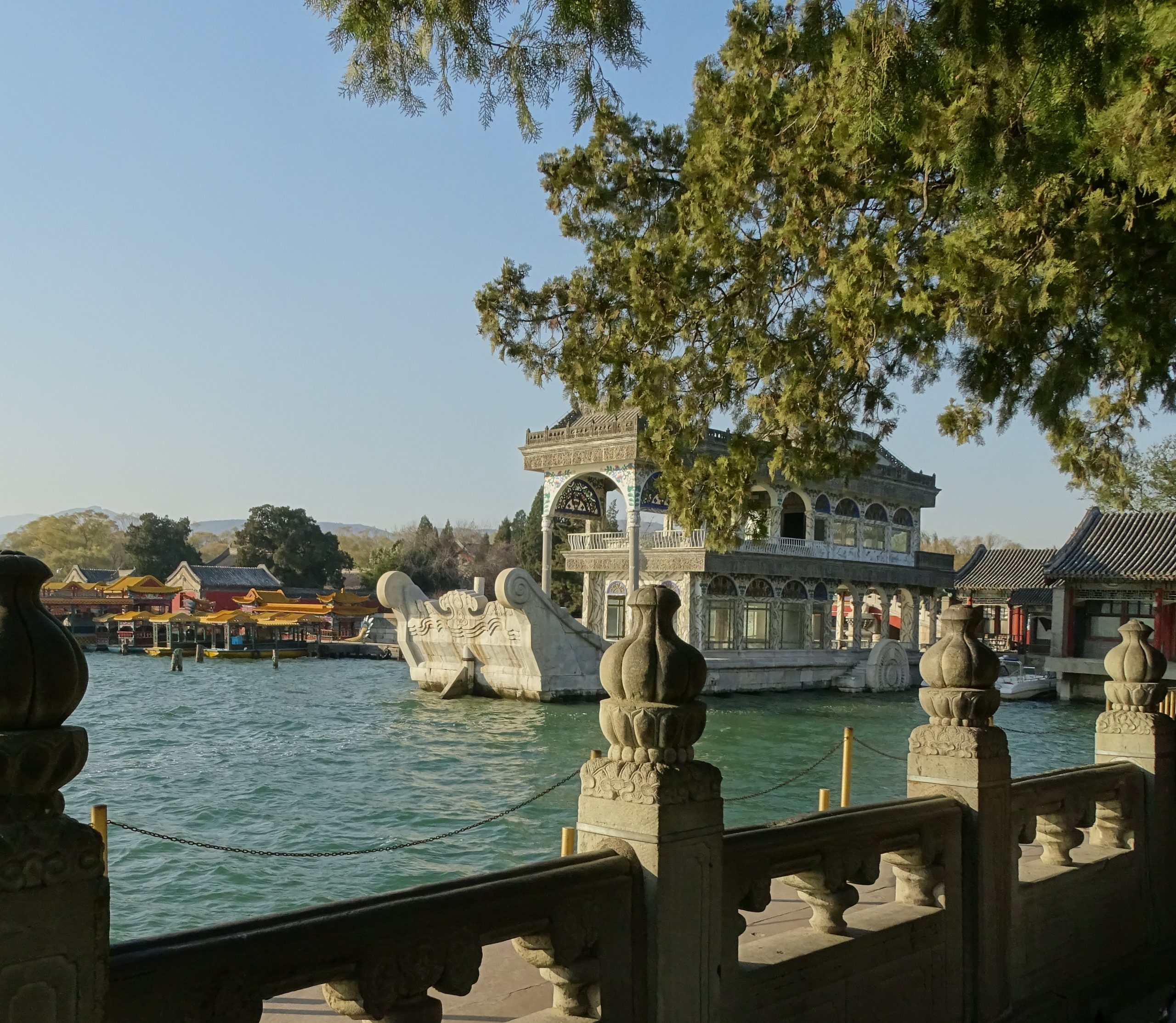
During the so-called ‘Golden Week’, a holiday period that takes place in China in both spring and autumn, thousands of tourists flocked to Beijing’s famous Summer Palace in early May. Among other architectural masterpieces, visitors can admire the marble boat ‘Qing Yàn Fǎng’ (Chinese: 清晏舫, meaning ‘clear and peaceful boat’) on the shores of Kunming Lake. On the one hand, it is a popular photo opportunity and an architectural highlight from the imperial era; on the other, the boat is often seen as a symbol of missed opportunities for modernisation and ill-advised investment. Built in the 18th century, the marble boat was restored between 1885 and 1895 following the destruction of the palace during the Second Opium War. Empress Cixi had it converted in the style of a European paddle steamer, with paddle wheels on either side, and used it as a teahouse. The structure does not quite live up to its name, however, as unlike real ships it cannot sail and lies firmly anchored in the water. Furthermore, only the base is made of marble; the upper structure was constructed from wood and artfully painted to resemble stone. The renovation was financed by the Empress Dowager using funds that had actually been earmarked for the establishment of a modern navy. Thus, the Marble Ship turned out to be a disastrous misinvestment for the Qing Empire: when the Boxer Rebellion broke out in 1900, China lacked a powerful fleet. And the Qing Dynasty came to an end shortly afterwards.
Leave a Reply